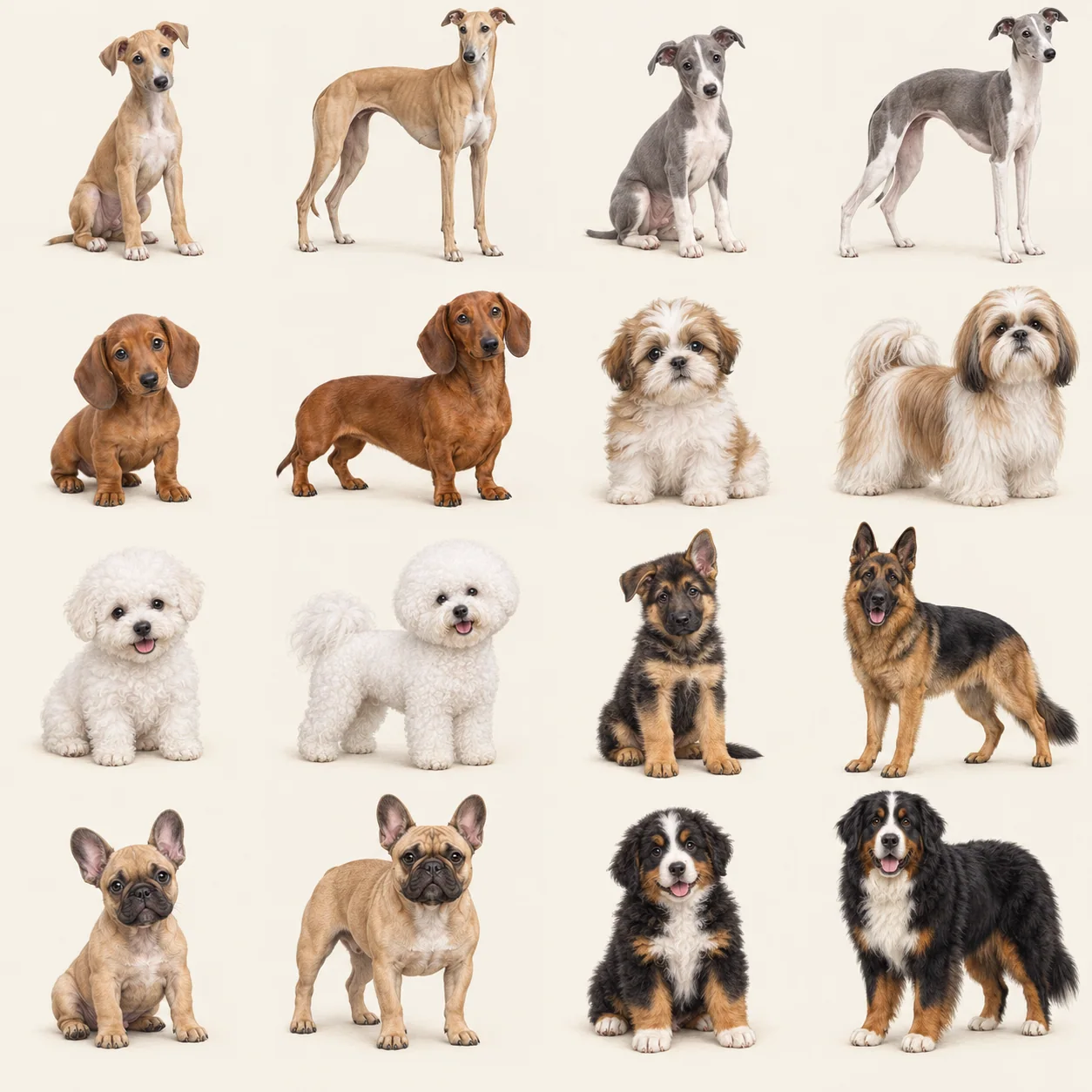
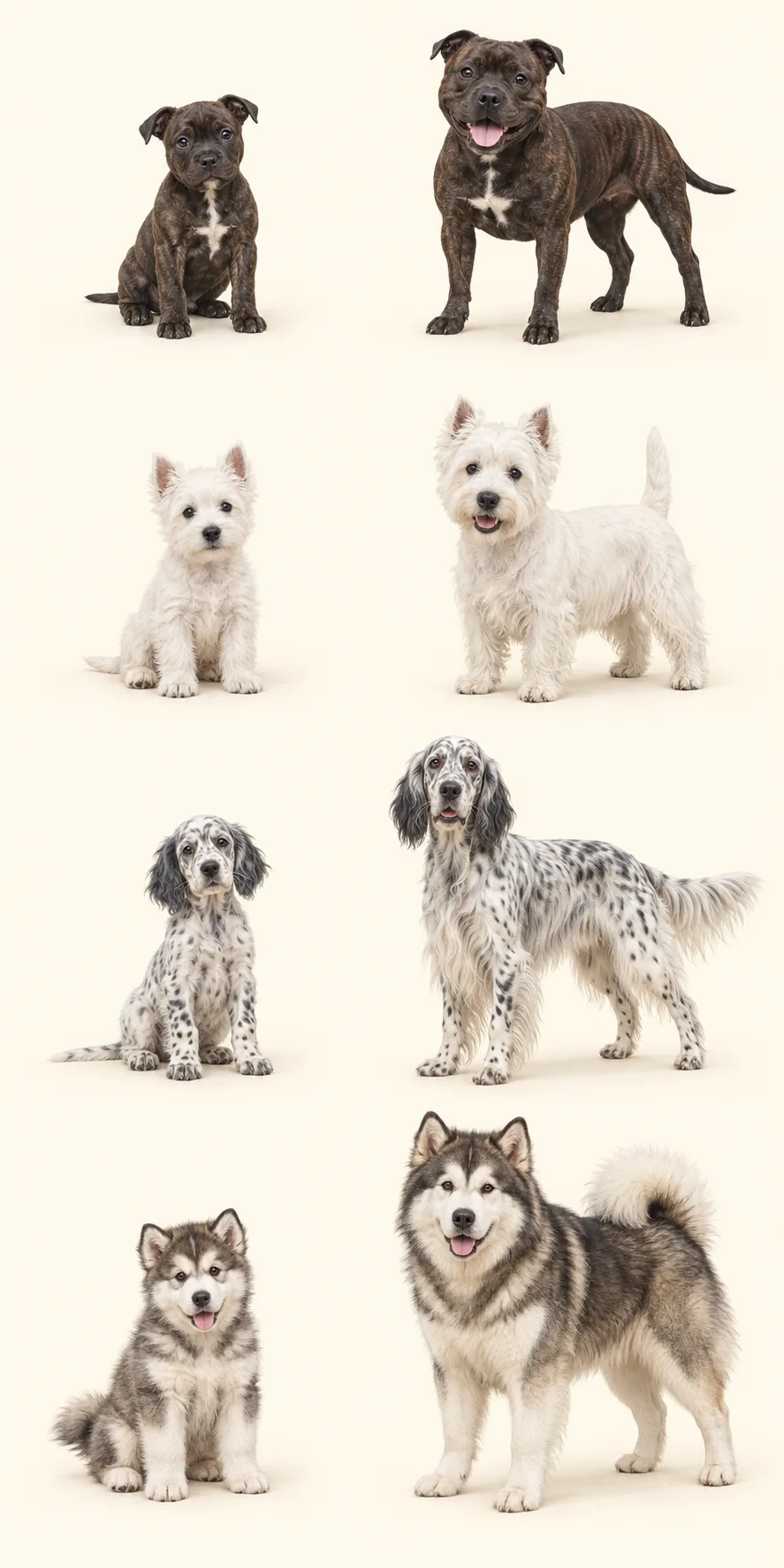
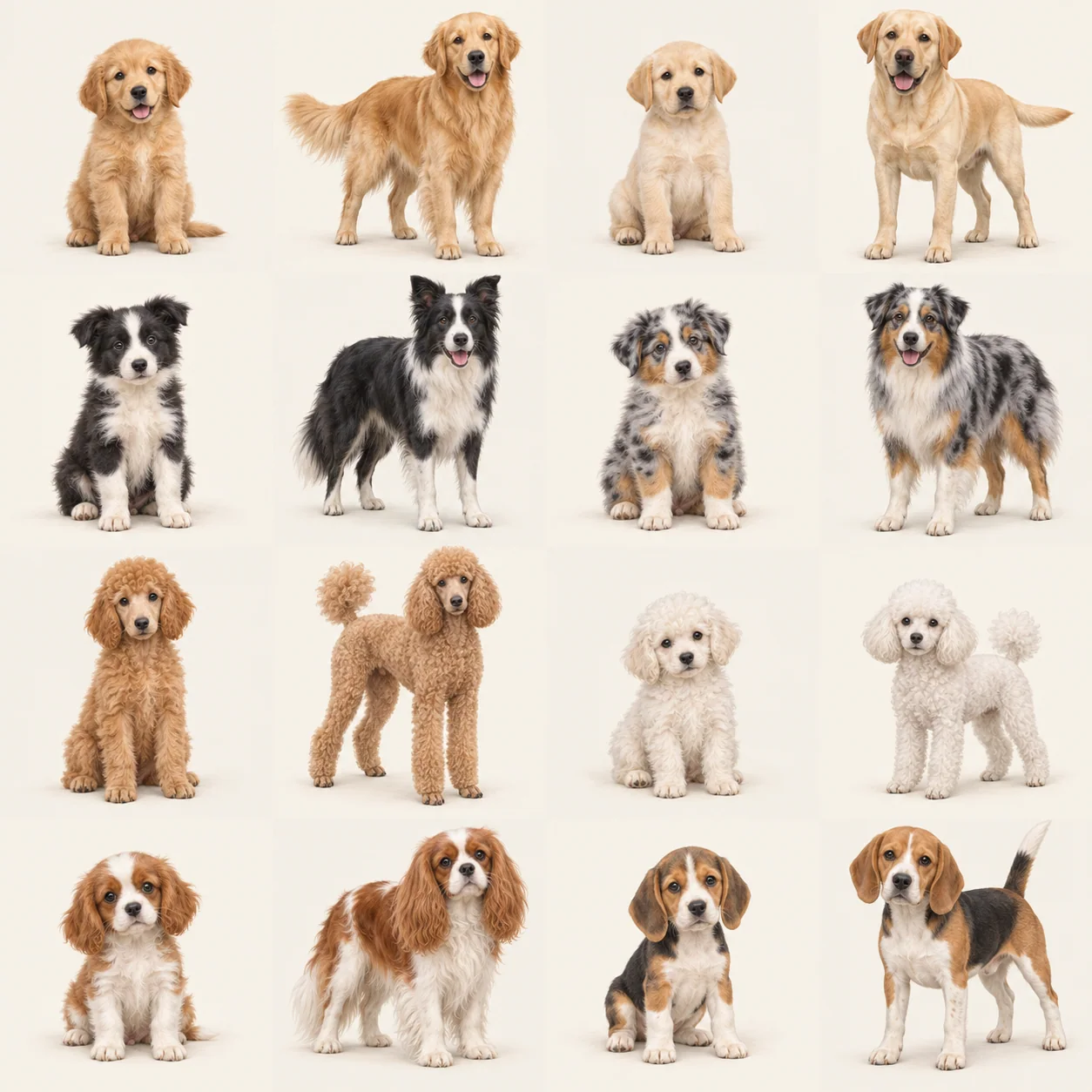
Puppy days
Begin brief, rewarding grooming practice and gentle manners training. A large puppy is still immature; provide rest and carefully managed activity that protects growing joints.
A devoted, patient working dog with a history of water rescue and draft work. Newfoundlands are affectionate family companions who still benefit from purposeful activity.
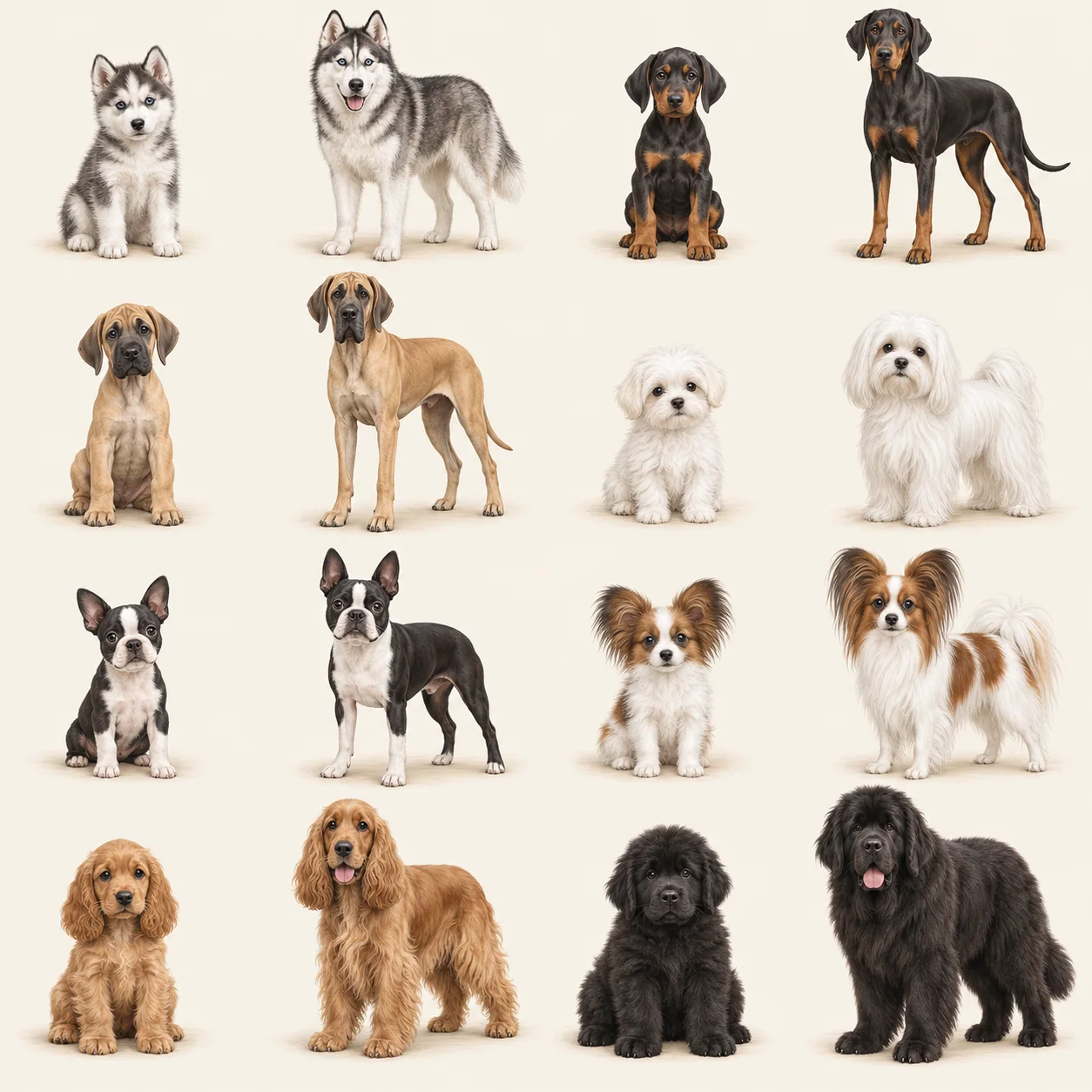
Illustrated puppy and adult examples.
Breed tendencies vary between dogs. Supervise children and dogs together. Cats and small pets need an individual compatibility assessment.
Our three levels group the AKC’s published five-point ratings: 1–2 becomes lower, 3 moderate, and 4–5 higher. The child rating describes young-child tendencies. These are general tendencies, not safety or compatibility guarantees.
AKC Newfoundland breed traits · Reviewed 8 October 2026Begin brief, rewarding grooming practice and gentle manners training. A large puppy is still immature; provide rest and carefully managed activity that protects growing joints.
Keep moderate daily activity and company in the routine. Walks, safe swimming or trained draft activities can provide rewarding outlets while reliable handling remains essential.
Brush the heavy coat thoroughly with a slicker and long-toothed comb, increasing frequency during shedding. Add daily moderate exercise, regular ear checks and nail care.
Worth planning for: Drool, shed hair and a heavy coat make cleanup part of daily life; giant size also affects transport, handling and care costs.
Reviewed 8 October 2026. Breed tendencies and mixed-background possibilities describe a starting point, not a promise about an individual dog.