Puppy days
Introduce handling and everyday experiences gently. Keep play brief, and teach comfortable independence in gradual steps.
Bred as a companion, the Pug is often sociable and amusing. Its sturdy small body suits shared indoor life and gentle activity.
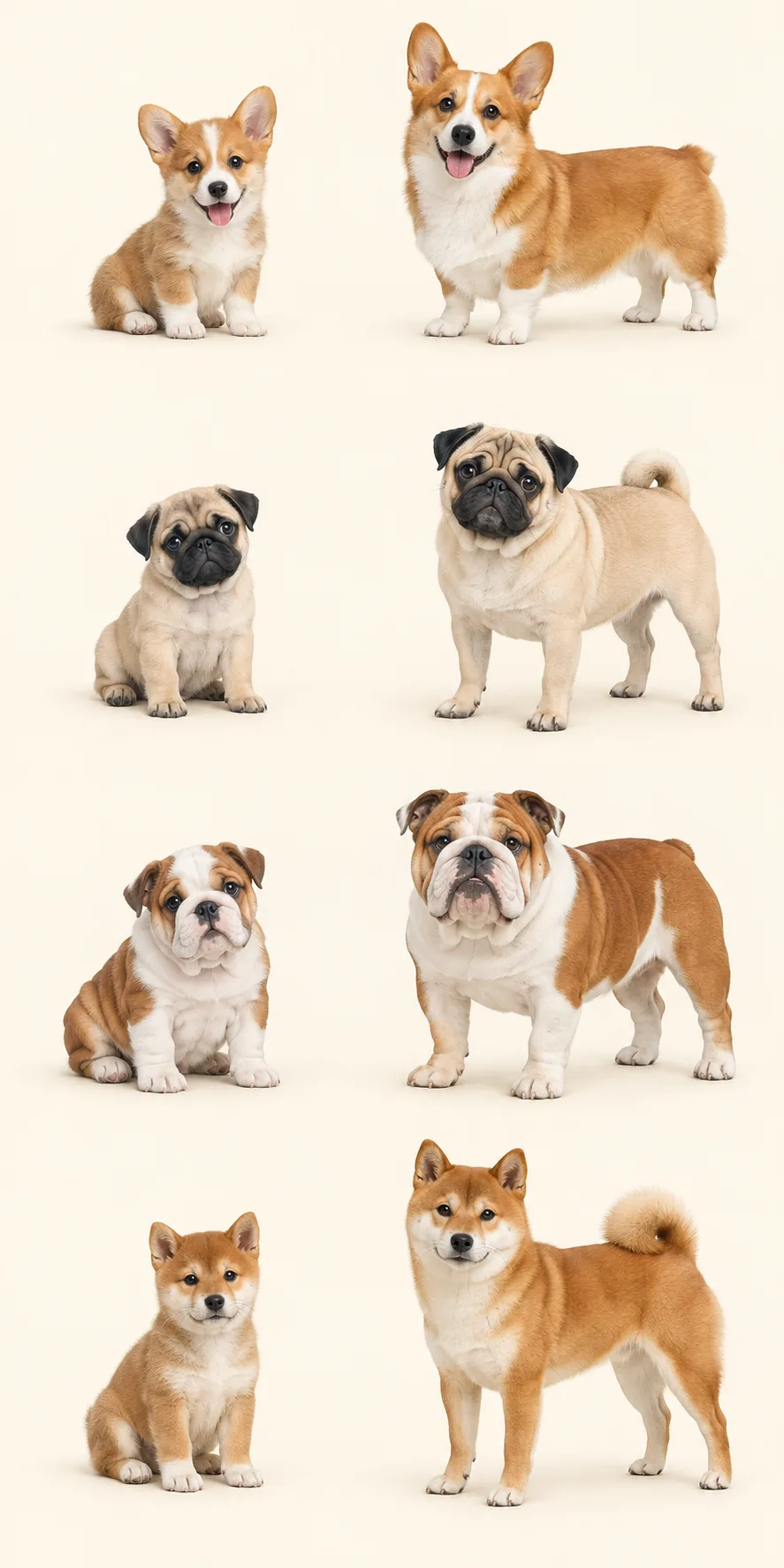
Illustrated puppy and adult examples.
Breed tendencies vary between dogs. Supervise children and dogs together. Cats and small pets need an individual compatibility assessment.
Our three levels group the AKC’s published five-point ratings: 1–2 becomes lower, 3 moderate, and 4–5 higher. The child rating describes young-child tendencies. These are general tendencies, not safety or compatibility guarantees.
AKC Pug breed traits · Reviewed 8 October 2026Introduce handling and everyday experiences gently. Keep play brief, and teach comfortable independence in gradual steps.
Maintain short walks and play according to breathing and weather. Measure food and include training rewards in the allowance.
Brush weekly, check eyes, and avoid strenuous activity in heat or humidity. Breathing comfort deserves individual veterinary assessment.
Worth planning for: Breathing difficulty and overheating are welfare concerns, not normal quirks.
Reviewed 8 October 2026. Breed tendencies and mixed-background possibilities describe a starting point, not a promise about an individual dog.