Puppy days
Start rewarding lead skills and calm greetings before strength grows. Introduce brushing gently, puppy-proof reachable objects, and allow quiet rest between positive experiences and short play.
A boisterous, affectionate scent hound developed to track otters on land and water. Otterhounds have powerful noses, independent persistence and a sociable pack background.
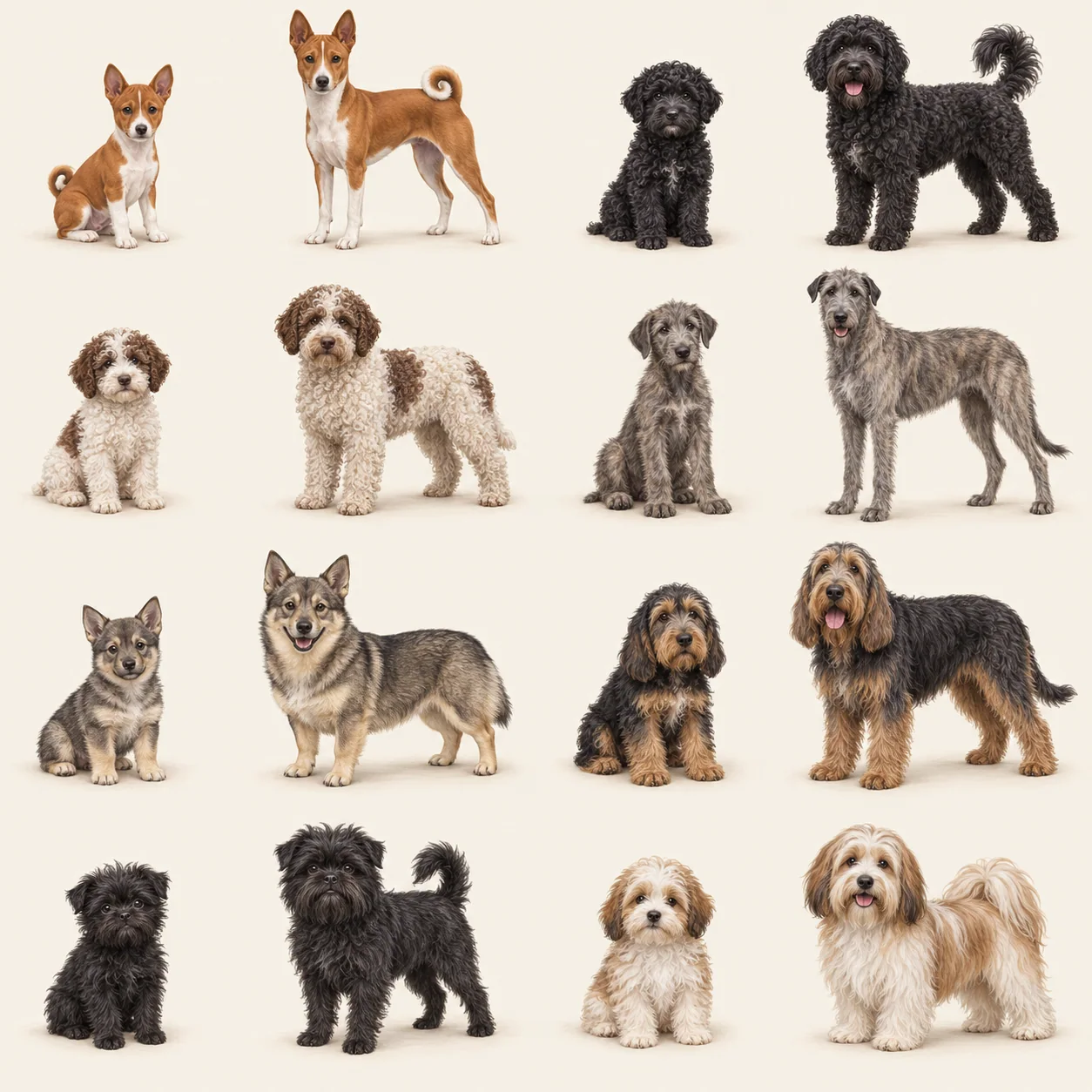
Illustrated puppy and adult examples.
Breed tendencies vary between dogs. Supervise children and dogs together. Cats and small pets need an individual compatibility assessment.
Our three levels group the AKC’s published five-point ratings: 1–2 becomes lower, 3 moderate, and 4–5 higher. The child rating describes young-child tendencies. These are general tendencies, not safety or compatibility guarantees.
AKC Otterhound breed traits · Reviewed 8 October 2026Start rewarding lead skills and calm greetings before strength grows. Introduce brushing gently, puppy-proof reachable objects, and allow quiet rest between positive experiences and short play.
Keep substantial exercise and scent exploration in the routine, using secure areas and leads. Tracking or trailing activities can provide a satisfying outlet for this persistent hunter.
Brush and comb the shaggy, weatherproof double coat regularly, more than once weekly. Provide substantial daily activity, including scent games and safely managed outdoor exploration.
Worth planning for: A powerful nose and independent hunting background call for secure outdoor management and patient, consistent teaching.
Reviewed 8 October 2026. Breed tendencies and mixed-background possibilities describe a starting point, not a promise about an individual dog.